What Is Paint Correction? Cut & Polish Explained (Canberra Guide)
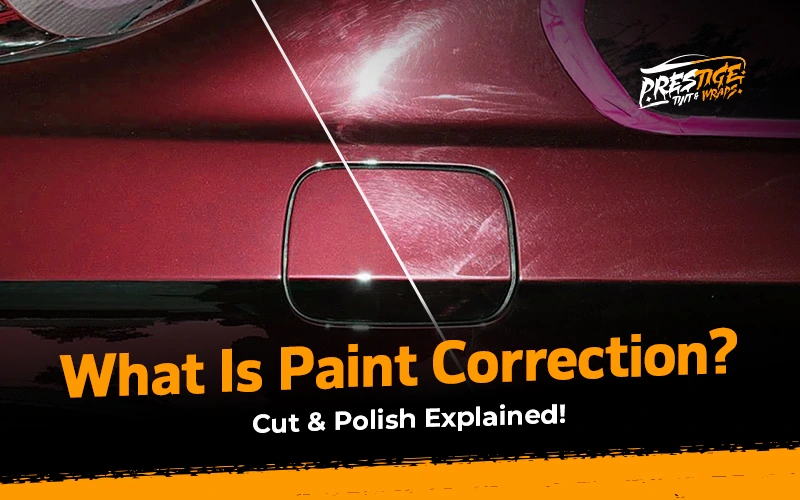
You step out into the Canberra sun, glance at your car, and everything looks fine. But the second you pull into a brightly lit petrol station or park under direct sunlight, there it is: a spiderweb of fine swirl marks dancing across the bonnet. Paint that looked glossy in the shade suddenly feels dull, tired, and aged well beyond its years.
That web of fine scratches isn’t permanent damage, but standard washing won’t fix it either. Achieving a mirror finish requires car paint correction—the precise process of restoring your clear coat.
What Paint Correction Actually Does
Many drivers confuse paint correction with a standard wash and polish. Traditional polishing leaves a temporary shine by laying down oils, while auto paint correction uses machine polishers, specialized pads, and abrasive compounds to micro-shave a fraction of a micron from your clear coat.
By leveling the clear coat around microscopic scratches, light reflects off a completely flat surface rather than bouncing off jagged edges. You aren’t just hiding defects; you are physically removing them.
Swirls, Scratches, Oxidation — What’s Correctable and What Isn’t
Paint correction works wonders, but it is bound by the thickness of your clear coat.
- Correctable: Swirl marks, wash hazing, light fingernail-level scratches, water spot etching, and oxidation.
- Non-Correctable: Deep scratches that penetrate through the clear coat into the primer or base paint, peeling clear coat (delamination), and severe rock chips.
Rule of Thumb: If your fingernail catches in a scratch, paint correction alone won’t remove it—it will require touch-up paint or full panel respraying.
One-Stage vs Multi-Stage Correction — What’s the Difference
Choosing the right cut and polish process depends on your vehicle’s current condition and your ultimate goals.
- One-Stage Correction: A combination of one finishing pad and polishing compound. Removes 50%-70% of light swirls and restores great gloss levels. Best for daily drivers and good condition paint work.
- Two-Stage Correction: A combination of a cutting compound that will remove all the deeper defects followed by polishing to eliminate the residue left behind by compound. Removes more than 85% of the defects.
- Multi-Stage Correction: An individualized, multiple step process used only on show cars, oxidized paintwork or hard/soft clear coats requiring almost 100% defect removal.
Paint Correction Cost in Canberra: What Affects the Price
Every vehicle demands a unique amount of labor, making local pricing variable across the ACT.
| Factor | Impact on Paint Correction Price |
| Vehicle Size | Larger SUVs and dual-cabs requires more labor time than compact hatchbacks. |
| Paint Hardness | European clears (like BMW or Audi) are notoriously hard and take longer to cut, while Japanese clears are soft and sensitive. |
| Defect Depth | Severely oxidized or heavily swirled paint require additional stages of cutting before polishing. |
| Condition of Bumpers & Trim | Intricate body panels, body kits, and gloss black trim pieces require delicate hand-polishing and careful masking. |
On average, expecting to pay for quality paint correction cost in Canberra means budgeting anywhere from $500 for a single-stage enhancement on a smaller car to $1,200+ for multi-stage correction on larger, heavily weathered vehicles.
Why Correction Should Always Happen Before Ceramic Coating
Applying a ceramic coating or paint protection film (PPF) over uncorrected paint is like locking a masterpiece inside a dirty glass frame. Ceramic coatings act as a permanent, semi-rigid glass layer over your clear coat—meaning any swirl marks, haze, or water spots present during application will be trapped underneath for years. Correcting the paint first ensures you lock in ultimate depth, clarity, and reflection.
Signs Your Car Needs Correction
Run through this quick self-check to see if your paintwork needs professional attention:
- The Sunlight Test: Under direct sunlight, do you see circular “spiderwebs” around the sun’s reflection?
- The Reflection Test: Look at a street sign or lightbulb in your paint’s reflection. Is the outline crisp, or does it look blurry and cloudy?
- The Texture Test: After washing, does the paint feel rough or look dull despite being clean?
If you answered yes to any of these, your vehicle is a prime candidate for restoration.
Myth vs. Fact
- Myth: “A good wash and wax removes swirl marks.”
- Fact: Wax merely sits on top of the clear coat to temporarily fill and mask light swirls for a few weeks. True paint correction physically levels the clear coat to remove the damage permanently.
Frequently Asked Questions
Can paint correction remove deep scratches? It removes light-to-medium scratches confined within the top clear-coat layer. If a scratch passes through to the primer or underlying paint layer, correction can soften its appearance, but full removal requires touch-up paint.
How long does paint correction take? A standard single-stage correction takes around 4 to 6 hours. Multi-stage corrections on heavily damaged vehicles or larger 4WDs often require 1 to 2 full days of meticulous labor.
Does paint correction remove all imperfections? Not always. The goal is maximum defect removal while preserving enough clear coat for long-term paint health. Aiming for 100% removal on an older daily driver isn’t always safe or practical, which is why technicians aim for safe, stunning transformation over reckless clear-coat depletion.
Ready to eliminate swirl marks and restore that showroom shine to your vehicle? Contact the local team at Prestige Tint & Wraps today to book your paint assessment or get an exact quote for your car.