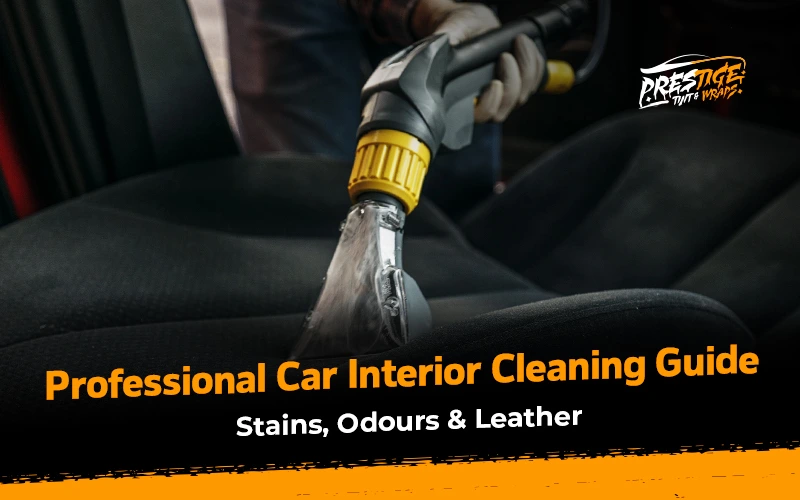
Professional Car Interior Cleaning Guide: Stains, Odours & Leather
We’ve all done it. You pull into the driveway, glance over at the passenger seat, and realize your car interior looks like a crime scene of spilled flat whites, kid snacks, and mystery dust. Most of us grab a packet of supermarket wet wipes, give the dashboard a quick once-over, vacuum the worst of the chip crumbs, and call it a day.
It feels clean for about forty-eight hours. Then the afternoon sun hits the windscreen, the cabin warms up, and that weird, stale carpet smell comes right back.
There’s a massive difference between keeping a cabin tidy and actual car interior cleaning. When you understand how deep dirt actually settles into foam cushions and carpet fibers, it changes how you look at your vehicle’s cabin entirely.
What’s Actually Involved in a Professional Interior Detail
A quick vacuum at the local car wash leaves about 80% of the grime behind. It’s just the truth.
When a vehicle comes in for proper interior detailing, we don’t just wave an upholstery nozzle around. It’s a deliberate, multi-step process that tackles every single material type differently:
- Dry extraction and blow-out: High-pressure air lines force trapped dirt, sand, and pet hair out from underneath seat rails, buttons, and deep carpet weave before a vacuum even touches the floor.
- Targeted agitation: Soft-bristled detail brushes work specialized, pH-balanced cleaners into plastic grain, leather stitching, and air vents to lift oils left behind by skin contact.
- Hot water extraction & steam: Steam at over 100°C sanitizes surfaces and kills bacteria hiding inside fabric weave, while warm water extractors inject cleaning solution deep into seat foam and immediately suck the liquefied dirt back out.
- Protection application: Non-greasy, UV-blocking dressings are applied to plastic and vinyl so the dash doesn’t fade, crack, or turn into a blinding glare magnet in the harsh sun.
Removing Stains Home Cleaning Can’t Touch
Here’s a scenario every car owner dreads: a dropped morning coffee or a kid throwing up on a hot summer road trip.
Your instinct is usually to grab a household spray, drop a towel over it, and scrub like crazy. Stop doing that. Scrubbing raw fabric with a harsh household detergent just shreds the carpet fibers and pushes the liquid deeper into the underlay foam below. Sure, the surface looks okay while it’s wet. But three days later? A dark, ugly ring wicks right back up to the surface.
A dedicated car seat stain remover works entirely differently than kitchen cleaners. Professional-grade car upholstery cleaner uses enzymatic agents to break down organic proteins—like milk, coffee, sweat, and mud—without ruining the fabric tension. Combined with commercial hot-water extraction, we draw the stain upward and out of the cushion foam, rather than rubbing it sideways into clean fabric.
If you’re dealing with deep set-in spots, using a high-grade car seat cleaner combined with localized steam pressure is usually the only way to completely lift the ring without leaving a water mark behind.
Getting Rid of Odours at the Source, Not Just Masking Them
Hang three air fresheners off your rearview mirror if you want, but you’re just layering “vanilla breeze” on top of old milk. It’s exhausting, and it doesn’t work.
Vehicle interior cleaning requires finding the actual source of the smell. Odours are volatile organic compounds trapped inside porous materials—your roof liner, your door cards, your floor mats, and the thick foam padding under your bum.
To permanently eradicate bad smells, you have to break down those trapped molecules:
- Deep carpet extraction: Removing the dried spill or mold spores trapped deep within the carpet pile.
- Cabin air filter replacement: Cleaning out the leaves, dust, and damp buildup sitting inside your HVAC evaporator.
- Ozone treatments or thermal fogging: Running an ozone generator inside the closed cabin destroys bacteria and neutralizes smoke, pet, or mold odours at a molecular level, even deep inside the headliner fabric.
Leather Care: Cleaning vs Conditioning (and why both matter)
Most modern cars come with leather or semi-synthetic seats. And almost everybody gets their care totally wrong.
When your leather seats look shiny and glossy? That isn’t a sign of clean leather—it’s a buildup of body oils, sweat, denim dye, and dirt grinding into the factory clear coat. Factory leather is supposed to have a smooth, subtle, matte finish.
To keep it that way, you have to split the process into two distinct steps:
Step 1: Deep Cleaning
Using a dedicated leather interior cleaner for cars, you lift dirt and skin oils out of the pores and grain of the hide. If you skip this step and apply a lotion straight over dirty leather, you’re just sealing the grime inside, which causes the material to harden, crack, and split along the bolster seams over time.
Step 2: Conditioning & Sealing
Once the leather is totally stripped of oils and dry, a quality conditioner restores flexibility and adds a sacrificial UV barrier. It keeps the leather soft, supple, and resistant to liquid spills without leaving that cheap, slippery residue that ruins your trousers.
DIY Interior Cleaning vs Professional — When Each Makes Sense
We aren’t going to sit here and tell you that you need to spend hundreds of dollars every time a few autumn leaves end up in your footwell. Doing it yourself makes total sense for weekly maintenance.
- DIY Cleaning:
- Dusting dash surfaces with a microfiber towel
- Weekly vacuuming of light grit and surface crumbs
- Wiping down glass and infotainment screens
- Immediate spot-cleaning fresh liquid spills
- Professional Detailing:
- Removing deep-set stains, grease, or salt buildup
- Eliminating stubborn odours (smoke, pets, mold)
- Restoring glossy, dirty leather to factory matte
- Pre-sale vehicle prep to maximize resale value
- Full hygienic sanitization (steam extraction)
If you’ve got a tight budget, grab a decent vacuum, a soft microfiber towel, and a balanced interior spray to keep things tidy every fortnight. But if you’ve bought a second-hand car that smells like the previous owner’s dog, or your cloth seats are covered in years of tide marks, a home kit just won’t cut it.
Myth vs Fact
Myth: “A good vacuum and wipe-down is basically the same as a detail.”
Fact: Professional interior detailing includes steam extraction, tornador air tools, and chemical decontamination steps that lift embedded dirt, body oils, and microscopic allergens a vacuum physically can’t reach from deep inside seat foam.
FAQ
How often should a car interior be professionally cleaned?
For most daily drivers, getting a comprehensive interior detail once or twice a year is the sweet spot. It stops ground-in dirt from permanently ruining carpet fibers and keeps your leather soft enough that it won’t crack along the outer bolsters.
Can professional cleaning remove old stains?
In almost all cases, yes. While some harsh substances (like permanent hair dye or certain acid-based chemicals) can permanently bleach or alter fabric fibers, professional-grade extractors and targeted enzymatic cleaners can safely lift even years-old coffee, food, and water stains out of seat upholstery.
Is leather conditioning necessary if seats look fine?
Absolutely. Leather loses its natural moisture constantly due to cabin heat and UV rays, even if it looks undamaged on the surface. Conditioning every 3 to 6 months keeps the hide pliable, preventing the clear coat from drying out and cracking when you slide in and out of the driver’s seat.
Need your cabin brought back to life? Learn more about our professional vehicle care options over at Prestige Tint & Wraps and give your car the deep clean it actually deserves.