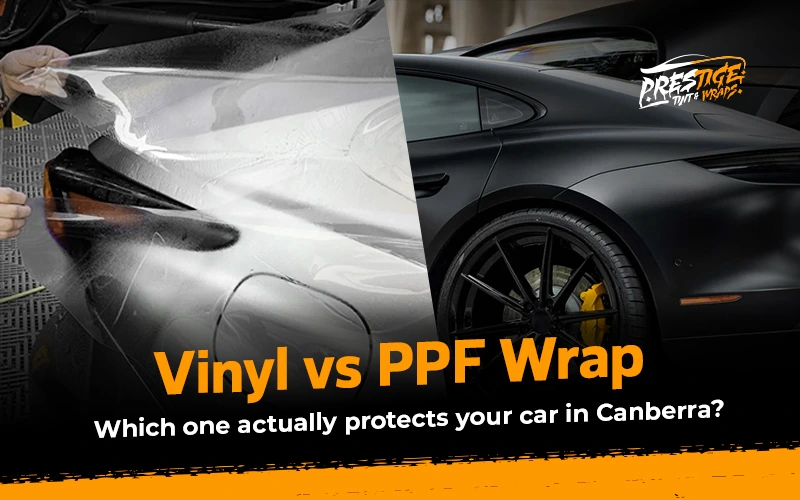
Vinyl vs PPF Car Wrap: Which One Actually Protects Your Car in Canberra?
Most people who walk into a wrap or PPF shop for the first time think they’re picking a tier. Like PPF is the “premium” option and vinyl wrap is the “budget” one, or vice versa, depending on who they talked to last. That’s not actually how it works.
PPF (paint protection film) and vinyl wrap solve two different problems. One is about protecting what’s already there. The other is about changing how your car looks. They’re not stacked on top of each other in a good-better-best lineup, they’re answering completely different questions. Once that clicks, the rest of the decision gets a lot easier.
Here’s how to tell which one your car actually needs, and when the answer is genuinely both.
PPF and Vinyl Wrap Aren’t Competitors — Here’s the Actual Difference
Think of it this way: PPF is armor, vinyl wrap is a costume change.
A PPF car wrap is a clear (or occasionally tinted) urethane film applied over your existing paint to shield it from physical damage. It’s designed to take the hit so your paint doesn’t have to. Vinyl wrap, on the other hand, is a cosmetic vinyl layer that changes your car’s color or finish. It’s not built primarily to stop rock chips, it’s built to make your Civic look like it rolled off a concept floor in matte grey.
Because they solve different problems, the “which one is better” question usually doesn’t have a single right answer. It depends on what you’re actually trying to fix: a car that looks fine but is getting chipped and scuffed, or a car that’s protected fine but looks like every other one in the car park.
What PPF Protects You From
PPF earns its keep in the places your car actually takes damage. Rock chips off the highway, road grime and grit kicked up by the car in front of you, fine scratches from hand washing, and general wear on high-impact panels.
Most installers, including us, apply it strategically rather than across the whole car by default: front bumper, bonnet, headlights, mirrors, and door edges are the classic high-strike zones. A full-body PPF package extends that coverage across the entire vehicle for maximum protection.
What makes PPF genuinely different from other protective options is that a lot of modern film is self-healing. Light swirl marks and fine scratches can shrink or disappear on their own when the film warms up, whether that’s sitting in the sun or with a heat gun during a wash. It’s also UV-resistant, which matters more in Canberra than people expect given how strong the sun gets here, and it’s chemically resistant to things like bird droppings, tree sap, and road salt that would otherwise sit on bare paint and start eating into it.
None of that changes your car’s color. A quality PPF install is designed to be close to invisible.
What a Vinyl Wrap Actually Changes
A full body car wrap is about transformation, not defense. It’s a vinyl film applied over your paint to change the color or finish entirely, matte, gloss, satin, metallic, whatever direction you want to take the car in. It’s also the more affordable route if you’re trying to avoid the cost of a full repaint while still getting a real color change.
Vinyl wrap does offer some incidental protection. It creates a barrier between your paint and the sun, which helps limit UV fading and oxidation, and it can take some of the light scuffs and everyday wear that would otherwise land directly on your factory paint. But that’s a side effect of the material, not its purpose. It’s nowhere near as resistant to rock chips or road grit as PPF is, because that’s simply not the job it was built for.
If your priority is looking different, wrap is your category. If your priority is staying pristine, it isn’t the tool for that on its own.
Can You Put PPF Under a Wrap?
Yes, and it’s a more common combination than most people realize. PPF goes down first, directly onto the paint, and the vinyl wrap goes on top of that.
This setup makes the most sense in a few specific situations:
- You’re wrapping a car you plan to keep long-term and want the paint underneath fully protected once the wrap eventually comes off
- You’re wrapping a newer or higher-value vehicle where preserving the factory paint matters for resale
- You expect the wrap to take a beating in high-impact areas (front bumper, lower doors) and want an extra buffer underneath
The tradeoff is cost and install time, since you’re paying for two separate applications rather than one. But for someone who wants a fully custom look without gambling on their paint underneath, layering PPF and wrap together gives you both the cosmetic change and the physical protection in one package.
Cost Comparison: PPF vs Wrap vs Doing Both
Pricing for both PPF and full wraps depends heavily on vehicle size, coverage area, and film or vinyl quality, which is why most reputable shops, us included, quote these as custom jobs rather than flat rates. A few things worth knowing as you budget:
Partial PPF coverage (front bumper, bonnet, mirrors, door edges) will always cost less than a full-body PPF package, simply because you’re covering less surface area with less film. Vinyl wrap pricing scales the same way, a full color change costs more than a partial wrap or accent panels.
Doing both isn’t just “PPF price plus wrap price” in every case. Because the PPF goes down first and the wrap sits over the top, some shops adjust pricing when they’re bundled into a single job versus done as two separate services months apart. The only way to get an accurate number for your specific car is a quote, since panel count, film brand, and finish all move the price.
If you’re weighing cost against value, the honest framing is this: wrap alone is the cheaper way to change your car’s look. PPF alone is the more targeted way to protect it. Together, you’re paying for both outcomes, not paying double for one.
Which One Does Your Car Actually Need?
Run through where your car actually lives day to day, and the answer tends to sort itself out.
Daily driver, high highway kilometres: PPF is doing the real work here. You’re the one racking up rock chips and road grime, and a protective car wrap on the high-impact panels will save you from a slowly deteriorating front end.
Weekend car or show car: This is where vinyl wrap shines, since you’re prioritizing look and you’re not putting it through daily wear. If it’s also a car you care about long-term, layering PPF underneath protects the investment.
New car, low kilometres so far: PPF as early as possible is the move. You’re protecting factory-fresh paint before it takes its first hit, and applying it early means there’s nothing to correct or repair before the film goes on.
Used car with existing wear: Depends on the condition. If the paint’s in rough shape already, a full wrap can mask cosmetic issues while giving you a fresh look. If the paint’s solid but showing early chip damage, PPF on the front end stops things from getting worse.
Myth vs Fact
Myth: PPF and wrap are just different price points of the same thing.
Fact: They’re not interchangeable tiers, they’re different tools. PPF is a physical shield that, in most cases, doesn’t permanently change your car’s color. Vinyl wrap is a cosmetic layer that only partially protects against impact. Most of the time they solve separate problems, and plenty of car owners end up layering them together rather than picking one over the other.
Frequently Asked Questions
Does PPF go under or over a wrap? PPF always goes on first, applied directly to the factory paint. The vinyl wrap is then installed on top of the PPF layer. Doing it in the reverse order doesn’t work, since wrap vinyl isn’t designed to have film applied over it afterward.
Can you wrap a car that already has PPF? Yes. If your car already has PPF installed, a vinyl wrap can go straight over it as long as the film is in good condition, free of bubbling, lifting edges, or heavy yellowing. A professional installer should check the existing PPF first to make sure it’s a suitable surface for the wrap to bond to.
Is PPF worth it if I’m getting a full wrap anyway? If you plan to keep the car for years and eventually remove the wrap, yes, it protects the paint underneath for the long haul. If you’re wrapping a car you’ll sell or re-wrap in a couple of years and don’t mind some wear building up on the factory paint in the meantime, you can reasonably skip it and put that budget toward the wrap itself.
Quick Recap
- PPF and vinyl wrap solve different problems: protection versus appearance, not different price tiers of the same service
- PPF shields against rock chips, road grime, and scratches, with self-healing and UV-resistant properties
- Vinyl wrap changes your car’s color or finish and offers only partial, incidental protection
- PPF can be applied under a wrap for cars where you want both the new look and long-term paint protection
- Pricing for both depends on vehicle size and coverage, so get a custom quote rather than assuming a flat rate