
Is It Safe to Clean Your Engine Bay? A Canberra Detailer Explains
Most car owners in Canberra leave their bonnet shut until an oil light pops on or a mechanic forces it open.
Why? Pure fear.
The universal assumption is that introducing water or an engine bay cleaner anywhere near an alternator or spark plug will immediately kill the electrical system, leave you stranded on the Parkway, and trigger a multi-thousand-dollar repair bill.
Here is the truth from a detailing shop floor: that fear is mostly thirty years out of date. While you definitely shouldn’t blast a pressure washer nozzle six inches from your air intake, modern engine bays are far tougher and better sealed than most drivers realize.
Why People Are Scared to Clean Their Engine Bay
Go to any car forum and you’ll find horror stories from the 1980s about soaked distributors and stalled carburetors. People remember their dad telling them to never, ever spray water under the hood.
That advice made sense when engines relied on exposed spark plug wires, open distributors, and unsealed relays.
Modern cars are built differently. Every electrical connector under the bonnet of a modern vehicle features rubber weather-pack seals specifically engineered to keep out road spray, mud, and rain at high highway speeds.
Myth: Any water near the engine will cause instant electrical damage.
Fact: Since the early 2000s, factory connectors and sensors are weather-sealed against moisture. The real risk isn’t water itself—it’s high-pressure spray blasted directly into open air intakes, alternator vents, or damaged aftermarket wiring.
The Right Way to Degrease Without Damaging Rubber and Plastic
Grit, road salt, and baked-on oil don’t just look terrible—they hold heat in the engine bay and degrade rubber hoses over time. But grabbing a harsh solvent from a hardware store shelf is a mistake.
- Start with a cool engine: Never spray degreasers or water onto a hot engine block. Rapid temperature drops can crack exhaust manifolds or warp plastic housings.
- Choose the right engine bay degreaser: Avoid harsh caustic cleaners that bleach raw aluminum or dry out rubber seals. You want a dedicated, pH-balanced engine bay cleaner designed to cut grease without eating plastic.
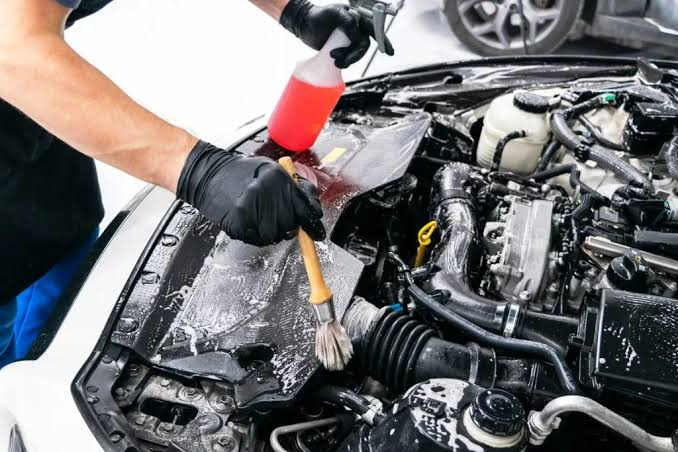
- Agitate with soft brushes: Spray the degreaser, let it sit for two minutes, and work it into the grime on plastic covers and hose runs with a soft-bristled detailing brush.
- Rinse with low pressure: Use a gentle mist or a trickle from a garden hose. You are rinsing away lifted grime, not pressure-washing a concrete driveway.
- Dry completely: Blow out trapped water around spark plug wells and electrical plugs with compressed air or a leaf blower before applying a non-greasy plastic dressing.
How Often an Engine Bay Actually Needs Cleaning
You don’t need to do this every weekend.
For standard daily driving around Canberra, a thorough engine bay detailing once or twice a year is plenty. The best time is usually right after winter to wash away accumulated road grime, salt, and mud before summer heat bakes it onto the metal work.
When to Leave It to a Professional
While basic maintenance is fine for a weekend DIYer, certain situations call for an experienced hand:
- Older/Vintage Vehicles: Pre-2000s cars with distributor caps, exposed wiring, or brittle plastic loom covers require specialized dry-cleaning methods or strict masking.
- 4x4s with Aftermarket Gear: If you’re running unsealed aftermarket winches, auxiliary light relays, or open-pod air filters, an inexperienced wash can force water straight into sensitive electronics.
- Pre-Sale Prep: A filthy engine bay tells a potential buyer the car wasn’t looked after. A spotless, professionally dressed engine bay adds instant perceived value and reassures buyers during inspection.
Frequently Asked Questions
Can I clean my engine bay myself?
Yes, provided you use the right water-safe techniques, cover vulnerable air intakes, and use a dedicated engine bay cleaner rather than a harsh industrial solvent.
Does engine bay cleaning affect resale value?
Absolutely. Buyers inspect under the bonnet to gauge how well a car was maintained. A clean engine bay eliminates red flags like hidden oil leaks or years of neglect.
How often should you clean an engine bay?
Once every 6 to 12 months is ideal for most daily drivers to prevent dirt buildup and keep rubber and plastic components from prematurely degrading.
Get a Professional Engine Bay Detail in Canberra
Want your engine bay looking showroom-fresh without the stress of doing it yourself?
At Prestige Tint & Wraps, we provide complete vehicle detailing and protection services across Canberra—from engine bay degreasing to paint protection and ceramic coatings.
Contact the team at Prestige Tint & Wraps today to book your car in or get a quick quote.