Is Your Tint Actually Illegal? The Defect Notice Nobody Warns You About
Short answer: yes, there’s a good chance it is, and most drivers don’t find out until an officer flags it on the road or it comes up at a roadworthy check. In the ACT, front side windows need to let through at least 35% VLT, and the windscreen can’t be tinted at all except for a small strip along the top. If your car is sitting below that, or if your last inspection is a distant memory, you’re already at risk of a defect notice.
We see this constantly at the shop. Someone bought their car second hand with tint already on it. Someone had tint done interstate where the rules were different. Someone just liked the darker look and figured “everyone does it”. None of that matters to Access Canberra. What matters is the VLT reading on the day someone checks.
What VLT Actually Means (and why 35% ≠ what people assume)
VLT stands for Visible Light Transmission. It’s the percentage of light that gets through your glass and film combined, not just the film on its own.
This trips people up constantly:
– A film rated “35%” doesn’t mean your window ends up at 35%. Your factory glass already blocks some light, so the film and glass stack together. Combine a 35% film with tinted factory glass and you can easily end up under the legal minimum without realising it.
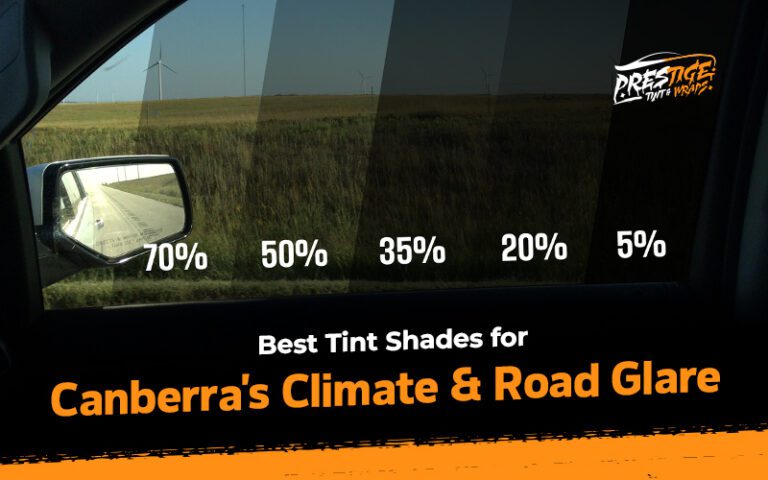
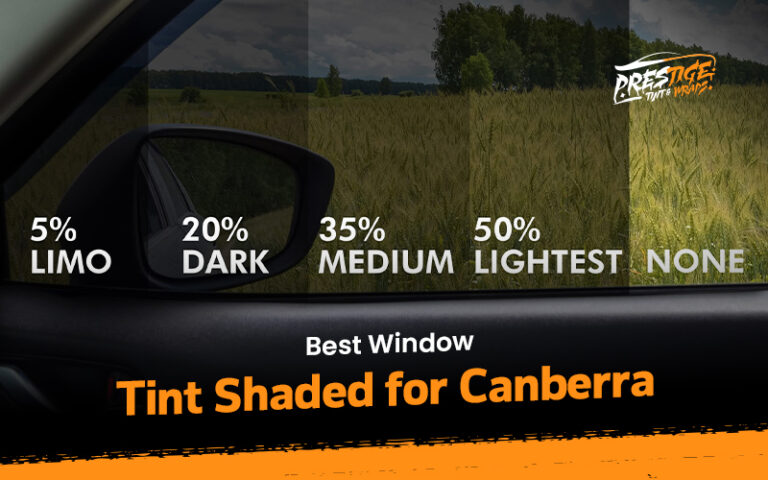
– Higher VLT number means lighter, not darker. A lot of people assume 35% is darker than 50%. It’s the opposite. Lower VLT means less light gets through, which means darker glass.
– ACT rules by section, so there’s no single number:
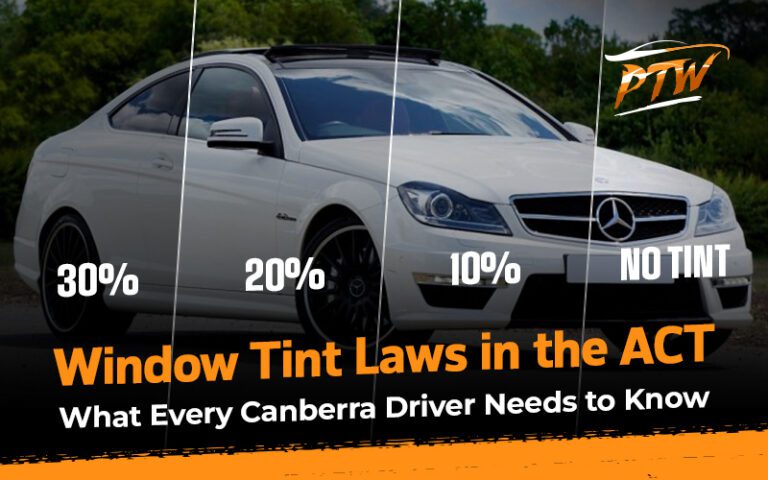
– Front side windows (driver and passenger): minimum 35% VLT
– Rear side windows and rear window: minimum 20% VLT, and this only applies once your car has properly working side mirrors
– Windscreen: no aftermarket tint at all, aside from a visor strip across the top 10%, sitting above where your wipers sweep
– Reflective or mirror finish film: not allowed on any window, regardless of VLT
The number on the box or the invoice from your installer is a starting point, not a guarantee. This is exactly why we measure combined VLT on your actual glass, not just the film spec, before and after the job.
The Defect Notice Process, Step by Step
Here’s what actually happens once your tint gets flagged, because most people have no idea until it’s happening to them.
1. Notice of defect raised. The non-compliance is detected by the inspector/ police officer, and he/she raises a defect notice. It states what needs to be corrected.
2. Correction period. You are allowed 14 days after issuance of the notice to correct the defect and have the vehicle reinspected. In case of a serious defect, it is illegal to drive the car until it has been sorted out.
3. Re-inspection. You take the car back in (or in some cases to an authorised inspection station) to confirm the tint is now compliant. This is where a lot of people get caught twice, because they remove the film but don’t check the combined VLT properly before reapplying anything.
4. Fine escalation if ignored. Miss the 14 days and it doesn’t just disappear:
– Day 14 to 21: you’ll get a letter warning that registration will be suspended in 21 days if the defect still isn’t cleared
– Day 35: registration gets suspended, and you’re notified that cancellation is coming in 21 more days
– Day 56: registration is cancelled outright
So a tint job that seemed like a minor styling choice can end with your car unable to be legally registered at all. It’s a slow burn, but it’s a real one.
The Rule Nobody Mentions — Selling a Car With Illegal Tint
This is the one that catches people out the most, honestly. If you’re selling a car with tint that doesn’t meet the standard, that’s your problem to fix before the sale, not the buyer’s problem to discover later.
A few things worth knowing here:
– Illegal tint can be treated as a roadworthiness issue, which means it can hold up registration transfer or come back on you if the new owner gets pulled up shortly after buying it
– “Sold as is” doesn’t cover safety non-compliance. You can’t wave away illegal tint the same way you might wave away a scratched bumper
– Buying a used car with existing tint? Get the VLT checked before you assume it’s fine. Plenty of cars change hands with tint that was never compliant in the first place, and now it’s quietly your problem
If you’re about to list a car, or you’ve just picked one up, it’s worth five minutes with a light meter before it becomes a much longer conversation with Access Canberra.
How to Check Your Own Tint in 2 Minutes
You don’t need fancy equipment to get a rough read on where you stand. Run through this before you assume you’re fine:
– Look at your windscreen. Any tint below the top 10% strip or below where your wipers sweep is a problem, full stop, no matter how light it is.
– Check for shine. Stand outside the car in daylight and look at your side windows from an angle. If they look mirrored or reflective, that’s a separate violation regardless of how dark or light they are.
– Inspect the film condition. Bubbling, peeling, or a purple/hazy tint is a common giveaway of old aftermarket film breaking down, and it can fail inspection even if the original VLT was legal.
– Think about when it was done. If you don’t know who installed your tint or when, or it came with the car when you bought it, treat that as a reason to get it checked rather than an assumption it’s fine.
– Get an actual meter reading. This is the only way to know your real combined VLT. Anything else is a guess, and guessing is exactly how people end up with a defect notice they didn’t see coming.
If more than one of these applies to your car, it’s worth getting it looked at properly before rego renewal or before you’re the one explaining it to an officer on the side of the road.
FAQ
Can I get fined for tint I didn’t install myself?
Yes. Responsibility sits with whoever is driving and whoever has the car registered, not whoever installed the film. If you bought the car with the tint already on, that’s still on you to sort out.
Does insurance cover a defect notice?
A defect notice itself isn’t something insurance “covers”, it’s a compliance issue you need to fix, not a claim. Where it gets serious is if you’re in an accident with illegal tint on the car. Insurers can use non-compliant modifications, including tint, as grounds to dispute or reduce a claim.
Is 20% legal on a UTE canopy?
Often yes, and this is where UTE and van owners get a bit more room than sedan drivers. Vehicles built for carrying goods, where the design already limits rear visibility, generally aren’t held to the same rear VLT minimum behind the driver. Front side windows still need to meet the standard 35% though. Worth confirming your specific setup rather than assuming, since canopy styles vary.
Not sure where your tint actually sits? Bring it into Prestige Tint & Wraps and we’ll check your combined VLT on the spot, front and rear, before it turns into a defect notice. If it needs sorting, we’ll get you back to fully compliant with film that’s built for Canberra’s sun, not just the bare legal minimum. Book your check today.