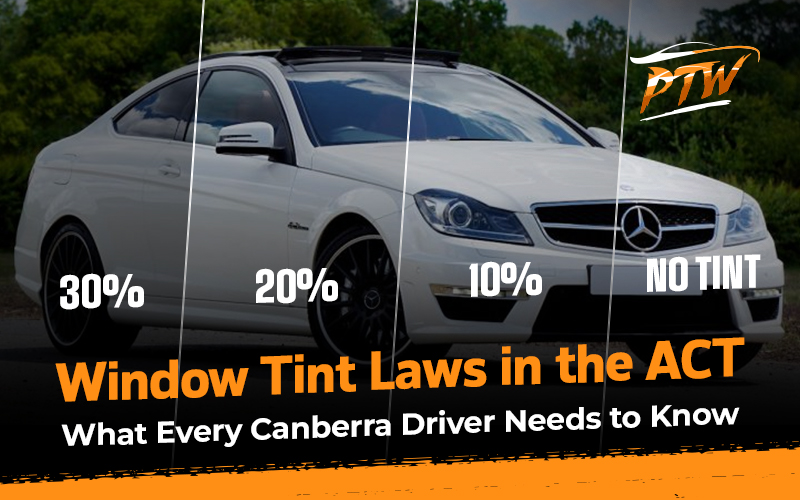
Window Tint Laws ACT: What Every Canberra Driver Needs to Know
Under the window tint laws ACT , your front side windows and windscreen must allow at least 35% visible light transmission (VLT). Rear side windows and the rear windscreen are more flexible — but only if your car has working mirrors on both sides. Get it wrong, and you’re looking at a defect notice or an on-the-spot fine.
So you’re thinking about tinting your car in Canberra, or maybe you just picked up a second-hand vehicle with dark windows, and you’re not sure if it’s road-legal. Either way, you’re in the right place. ACT tint rules aren’t complicated once you understand the basics — but the consequences of getting it wrong are real enough that it’s worth knowing before you book an appointment or drive past a police checkpoint.
The ACT VLT Rules: Broken Down by Window
The key number in ACT tinting law is visible light transmission (VLT). This is the percentage of natural light that passes through your glass. The higher the number, the lighter the tint. Here’s how it applies to each part of your car:
| Window | Minimum VLT required | Status |
| Windscreen (top 10% band only) | Tinting permitted in top band | Restricted |
| Front side windows (driver + passenger) | 35% VLT minimum | Regulated |
| Rear side windows | 20% VLT minimum | Flexible |
| Rear winscreen | 20% VLT minimum | Flexible |
In plain terms: anything behind the B-pillar (the post between your front and rear doors) can be tinted fairly dark, down to 20% VLT, but your front windows need to stay at 35% VLT, as required by Canberra rules. That’s a medium shade, not pitch black. Think of a light smoke finish, not limo tint.
What counts as an illegal tint?
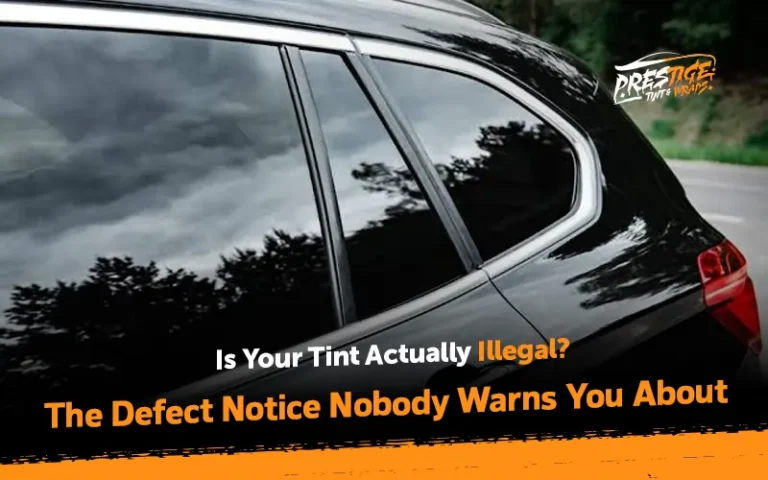
The most common issue we see is people tinting their entire car — front and rear — with the same dark film. That’s where things go wrong fast. A front side window with, say, 15–20% VLT is significantly below the legal limit and is almost certain to fail a vehicle inspection.
A few things that will also get you pulled up:
Reflective or mirrored films: Even if the VLT is technically within range, film that creates a mirror-like reflection from the outside is not permitted on any window. It’s a hazard for other drivers — especially in low light.
Aftermarket tint on the windscreen: The windscreen can only have a factory-applied tint or a light strip across the top 10% of the windscreen. Applying aftermarket film to your main windscreen viewing area is illegal, full stop.
Bubbling or obscured vision: Even factory-legal tint can fail an inspection if it’s degraded, bubbling, or otherwise reducing visibility. Old peel-and-stick films are notorious for this. If your tint looks worn, it’s worth replacing before your next rego check.
What Is the Window Tint Fine in ACT?
On-the-spot fine (modified vehicle)
$198-$628
Plus, a defect notice requires you to rectify the tint before your vehicle can be legally driven. Costs compound fast once you add removal and re-tinting.
The window tint fine ACT police can issue on-the-spot fines depending on whether it’s treated as a general vehicle defect or a modification offense. What stings more, honestly, is the follow-on cost: you’ll need to remove the non-compliant film, possibly re-tint with legal product, and present the vehicle for a clearance inspection — all on your own time and budget.
If your car is issued a major defect notice, it cannot be driven on public roads until the defect is cleared. That’s a serious disruption if you depend on your car daily.
Does the ACT accept interstate tints?
This comes up often because ACT residents frequently cross into NSW for work or leisure. The ACT adopts national vehicle standards as its base, but the 35% front window requirement is enforced locally. If you had your car tinted to NSW specs (which are similar but not identical in every detail), it may or may not be legal in the ACT — the smart move is to check the actual VLT on your film, not just assume interstate compliance carries over.
If you’re genuinely unsure what VLT your current tint is, a reputable installer can measure it with a tint meter in about two minutes. That’s a much better way to find out than getting flagged at a checkpoint.
Choosing the right legal tints for Canberra conditions
Canberra’s climate is genuinely brutal on cars. You get scorching UV in summer, freezing mornings in winter, and relentless glare year-round — so getting a high-quality tint isn’t just about looks; it’s genuinely functional.
The good news is that legal tint (35% VLT on the front) still offers meaningful heat and UV rejection if you choose the right film technology. The ceramic window tint Canberra installers offer is worth considering — it rejects significantly more infrared heat than standard dyed films, without needing to go darker to get that benefit. You can stay comfortably within legal limits while still keeping your car noticeably cooler.
For the rear windows where 20% VLT is permitted, there’s much more latitude to go darker for privacy and heat control — especially useful if you regularly park in open carparks with direct sun exposure.
Legal window tint Canberra: What to look for when booking
Plenty of people get caught out not because they deliberately went illegal, but because they trusted a cheap installer who either didn’t know or didn’t care about the legal limit. Here’s what separates a compliant install from one that’ll cause you grief:
Ask for the VLT spec in writing: A professional installer should be able to tell you exactly what percentage VLT the film is, on each window, after installation. If they can’t or won’t give you that, walk away.
Check if they account for factory glass tint: This is a detail that catches people off guard. Most modern vehicles already have a slight factory tint on the glass — sometimes with a 5–10% VLT reduction. If your installer applies a 35% film to glass that already has a 10% factory tint, your effective VLT could be closer to 25%. Good installers measure combined VLT, not just the film spec.
Warranty on the film: This detail catches people off guard. Most modern vehicles already have a slight factory tint on the glass — sometimes with a 5–10% VLT reduction. If your installer applies a 35% film to glass that already has a 10% factory tint, your effective VLT could be closer to 25%. Good installers measure combined VLT, not just the film spec.
Key Takeaways
§ Front side windows must be at least 35% VLT in the ACT — this applies to both driver and front passenger windows, and there are no exceptions for medical conditions without specific authorization.
§ Rear windows and the rear windscreen can go down to 20% VLT, but only if both external mirrors are fitted and working properly.
§ A window tint fine in the ACT isn’t just a financial hit — a defect notice can stop you from driving your car altogether until it’s fixed and inspected.
§ Factory glass tint affects your final VLT reading — always ask your installer about combined VLT, not just the film’s rated percentage.
§ Ceramic films let you stay legal on the front while still getting real heat and UV performance — you don’t have to sacrifice comfort to stay compliant.
If you’re ready to tint or need to check whether your current film complies with the ACT standards, talk to a professional who knows them inside and out. Good window tinting Canberra installers such as Prestige Tint & Wraps will measure your glass, confirm your VLT before and after, and give you documentation you can rely on — no guesswork, no fines.